
Chapter 3: Introduction to Neurobiology
|
Chapter 3 — Module 1: Foundations The Biology of Risk, Without Losing the Person Understanding how genetics and brain function shape vulnerability, adaptation, and the possibility of recovery. |
Chapter 3 builds on the earlier discussion of substance classification and conceptual models by turning to how vulnerability and adaptation take shape in the body and brain. Biology is not introduced here as a separate explanation. It deepens what the earlier chapters established, showing why substance use disorder does not unfold in a uniform way and why change is often more complicated than accounts based on choice alone suggest.
The chapter moves through two parts. The first examines genetic influence and how to interpret inherited risk without treating it as destiny. The second turns to brain function, development, tolerance, and withdrawal, showing how the body adjusts over time and how those adjustments shape both continued use and attempts to stop. The purpose is not to reduce people to biology, but to understand how biological processes operate within lived experience, where context and history continue to shape what substance use looks like and how recovery becomes possible.
Student Learning Outcomes
This chapter supports the following course objective. By engaging with the material, students will work toward the ability to:
Apply ethical standards, professional values, and communication skills to engage individuals, families, and communities affected by substance use and misuse, demonstrating an understanding of the neurobiological and biopsychosocial foundations that inform professional practice.
| • | Interpret genetic risk for substance use disorder without treating inherited vulnerability as destiny. |
| • | Describe the brain regions and neurotransmission processes involved in substance use and adaptation. |
| • | Apply neurobiological understanding in a way that informs practice without reducing people to their biology. |
Council on Social Work Education (CSWE) Competencies Addressed
Competency 1: Demonstrate Ethical and Professional Behavior
Competency 4: Engage in Practice-Informed Research and Research-Informed Practice
Section 3.1 — Interpreting Genetic Risk
Read this section+
Genetic research has expanded the understanding of vulnerability to substance use disorders in meaningful ways, yet the way this knowledge is interpreted often creates more confusion than clarity. The central issue is not whether genetics matters, but how that information is used in practice. Genetic influence operates probabilistically rather than predictively, shaping vulnerability without dictating outcome. What ultimately unfolds reflects an ongoing interplay between biological predisposition and lived experience, where exposure to stress, access to support, and the conditions of one’s environment shape how risk is expressed. When this distinction is lost, genetic information is easily misused to support fatalistic thinking or to justify systems that already produce unequal risk.
Holding this tension requires a deliberate shift in how biological knowledge is understood. Biology matters, and biology does not determine destiny. Genetic variation, neurobiological processes, and developmental timing each contribute to vulnerability, yet their influence is always contingent on context. The concern is not the science itself, but the meaning assigned to it. Biological explanations can either reduce blame and deepen compassion or reinforce narratives that position individuals as inherently impaired. In this course, biological knowledge is positioned as a means to improve understanding of behavior while resisting interpretations that suggest people are fixed or beyond change.
Biology matters, and biology does not determine destiny. Genetic influence should expand responsibility for support rather than narrow expectations for recovery.
Genetic Influences
Research across multiple disciplines consistently indicates that genetic factors account for a substantial portion of vulnerability to substance use disorders, with heritability estimates often approaching 40 to 60 percent depending on the substance and population studied (Bares & Chartier, 2020; Kendler et al., 1992). This does not suggest that substance use disorders are inherited in a direct or predictable way. Instead, it reflects a heightened likelihood that becomes meaningful only under certain conditions. Familial patterns provide early evidence of this influence, as individuals with close biological relatives who experience substance use disorders demonstrate elevated risk (Merikangas et al., 1998; Russell, 1990). At the same time, most individuals with a family history do not develop a substance use disorder, reinforcing that genetic vulnerability requires environmental activation rather than functioning as a fixed path.
Genetic influence is best understood as distributed rather than singular. There is no universal “addiction gene,” and attempts to isolate one have consistently failed to produce stable conclusions. Instead, vulnerability reflects the combined influence of multiple genetic variations operating within broader biological and psychological systems. Some of these variations shape how the body processes specific substances, while others influence underlying processes such as mood regulation or behavioral inhibition. This helps explain why substance use disorders often intersect with conditions such as depression, while still presenting with considerable variability across individuals.
Figure 3.1. Sample Family Pedigree (Genogram) Tracing Alcohol Use Disorder

Note. From Stoddard Dare & Begun (2020). CC BY-NC 4.0.
The research methods used to study genetic contributions reinforce this complexity. Family pedigree studies trace substance-related behaviors across generations, demonstrating that risk tends to increase with genetic proximity while still allowing for considerable variation in outcome. Twin studies extend this understanding by examining the degree of similarity between identical and fraternal twins. Greater similarity among identical twins provides strong evidence of genetic influence, yet differences between them make clear that environmental conditions continue to shape outcomes in meaningful ways. Adoption studies further clarify this relationship by showing that children with biological risk can experience reduced likelihood of developing substance use disorders when raised in supportive environments, even though some degree of vulnerability remains (Foroud et al., 2010).
Advances in genomic research have shifted the focus from whether genetics matters to how genetic variation contributes to different patterns of substance use. Genome-wide association studies identify clusters of genetic variation linked to behaviors such as heavy alcohol use or nicotine dependence, though each individual contribution remains small (Hancock et al., 2018). This has led to a more integrated understanding of genetic influence through polygenic models, where overall risk reflects the accumulation of many small effects rather than a single determining factor.
An important dimension of this work involves the recognition of protective genetic influences. Certain genetic variations reduce the likelihood of developing substance use disorders by altering physiological responses in ways that discourage continued use. Variations in alcohol metabolism provide a clear example, where the resulting physical discomfort functions as a natural deterrent (Edenberg et al., 2019). These findings complicate simplistic narratives of risk by demonstrating that genetic influence does not operate in a single direction.
Key research methods for studying genetic contributions
| Family pedigree studies trace substance-related behaviors across generations, demonstrating that risk increases with genetic proximity. |
| Twin studies compare identical and fraternal twins, providing evidence of genetic influence while showing that environmental factors continue to shape outcomes. |
| Adoption studies show that biological risk can be reduced in supportive environments, even though some vulnerability remains. |
| Genome-wide association studies (GWAS) identify clusters of genetic variation linked to substance use behaviors, with each individual contribution remaining small. |
What Is Known About the Genetics of Substance Misuse
When findings from family, twin, adoption, and genomic research are considered together, a more coherent picture of genetic influence begins to take shape. The evidence consistently shows that genetics plays a meaningful role in the development of substance use disorders, while also making clear that this role is partial rather than determinative. Heritability estimates vary by substance and population, yet patterns remain consistent, demonstrating that vulnerability is influenced by genetic factors across multiple substances. This influence extends beyond the development of disorder itself and appears in earlier stages of use, including initiation and progression to regular patterns. For example, estimates of heritability for initiating tobacco use during adolescence range widely, reflecting variability across studies, while regular tobacco and alcohol use show more stable moderate heritability estimates (Bares & Chartier, 2020).
A central theme across this body of research is that genetic influence is polygenic. Rather than being driven by a single gene, vulnerability reflects the combined effect of many genetic variations, each contributing a small influence. Earlier attempts to identify specific “candidate genes” produced inconsistent results, largely because they assumed a level of simplicity that the data does not support (Bares & Chartier, 2020). More recent approaches move toward aggregation, where polygenic scores represent the cumulative effect of multiple genetic contributions.
Research suggests that there are both shared and substance-specific genetic influences, meaning that some underlying vulnerabilities cut across substances while others remain distinct (Li et al., 2011; Palmer et al., 2012). This partially shared architecture helps explain why individuals may experience challenges across multiple substances, while also accounting for why susceptibility does not translate uniformly from one substance to another. In some cases, this shared vulnerability overlaps with broader psychological conditions such as depression, although this relationship is neither universal nor consistent across individuals.
Patterns of heritability also reflect shifts over time and across populations. Earlier research suggested stronger genetic influence among men, with environmental factors accounting for a greater proportion of variation among women (Jang et al., 1997; Kendler et al., 1992). More recent findings indicate that these differences have become less pronounced, suggesting that changes in social context and substance use patterns influence how genetic vulnerability is expressed (Palmer et al., 2012).
The question of whether substance use disorder is genetic does not lend itself to a simple answer. Genetic factors clearly contribute to vulnerability, yet they do not function independently and do not determine outcome. What the research consistently demonstrates is a pattern of partial influence, shaped through interaction, in which biological predispositions are expressed through the conditions of lived experience. This understanding moves the conversation away from reductionist explanations and toward a more grounded recognition of both risk and the ongoing possibility for change.
Section 3.2 — Understanding the Brain Without Losing the Person
Read this section+
Neurobiological explanations of substance use can feel compelling because they appear to offer clear, mechanistic answers to complex human behavior. The appeal is understandable, but it requires careful interpretation. Brain structures and neurochemical processes help explain how craving develops, how reinforcement strengthens behavior, and how patterns become habitual over time. What they do not fully explain is meaning, choice, or the capacity for change. When neurobiology is treated as a complete explanation, it risks flattening human experience into a purely biological process. For professionals, the task is not to reject neuroscience, but to situate it appropriately so that it informs understanding without replacing the person at the center of that experience.
Tolerance and withdrawal provide a clear example of how biological processes shape behavior, often misunderstood. These processes are not indicators of moral weakness or lack of motivation. They reflect the brain’s ongoing effort to maintain stability in the presence of repeated substance exposure. As the body adapts, it requires greater input to achieve the same effect, and it becomes destabilized when that input is removed. This biological adaptation helps explain why change can be difficult to sustain and why abrupt cessation can carry significant risk.
Neurobiology of Substance Use
The neurobiology of substance use reflects an integration of structure, function, and communication within the brain. This includes the organization of brain regions, the activity of neural systems, and the chemical processes that allow neurons to communicate. Advances in neuroscience have made it possible to map how different areas of the brain interact during substance use, particularly in relation to reward, pain, memory, and emotional regulation. These processes do not operate independently. Instead, they form interconnected systems through which learning occurs, behaviors are reinforced, and patterns become established over time. This perspective helps explain why substance use can shift from voluntary behavior to something that feels increasingly automatic and difficult to change. It also clarifies why the timing of exposure, particularly during critical developmental periods, has lasting implications.
Understanding how substances influence neurochemical processes further connects brain activity to behavior. Neurotransmitter systems play a central role in shaping how substances are experienced, influencing both immediate effects and longer-term patterns of use. This knowledge has practical implications, as it informs the development of treatment strategies that target these biological processes. Medication-assisted approaches, along with interventions such as mindfulness and neurofeedback, reflect efforts to work with the brain’s adaptive systems rather than against them.
Neuroanatomy and Function
The structure of the central nervous system has long been studied, yet newer imaging technologies such as functional magnetic resonance imaging have refined our understanding of how specific regions of the brain contribute to behavior. These tools allow researchers to observe how brain activity changes in response to substance exposure and how these changes relate to decision-making, emotional regulation, and behavioral control. Substance use does not affect only cognitive processes. It also influences physiological regulation through its interactions with systems that operate outside conscious awareness, including those responsible for heart rate, breathing, and the stress response (Begun & Brown, 2014).
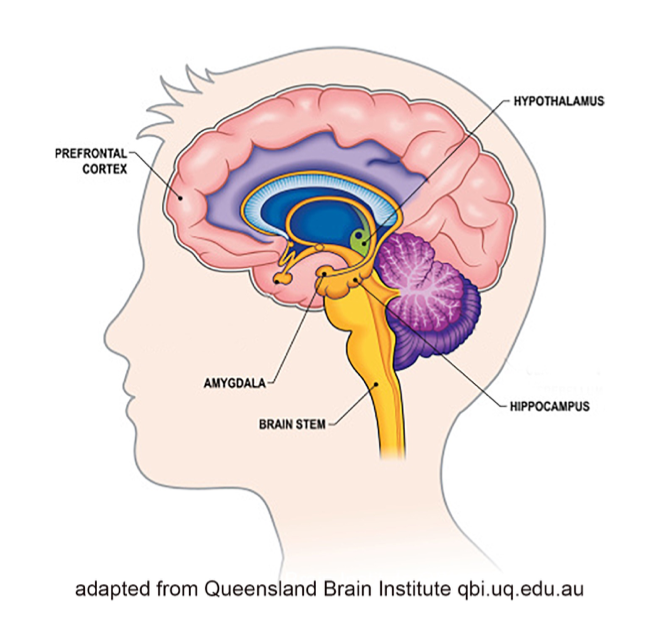
Within this system, certain brain regions are particularly relevant to the development of substance use disorders because of their role in processing reward, emotion, and decision making. The limbic system functions as a central network for emotional and motivational processes, shaping how experiences are interpreted and how responses are generated (Begun & Brown, 2014). The amygdala contributes to how emotional significance is assigned to experiences, particularly those involving threat or reward, and plays a role in how stress is experienced and remembered. The hippocampus supports memory formation, especially in relation to environmental cues, which helps explain why certain contexts can trigger craving even after periods of abstinence. The nucleus accumbens is part of the brain’s reward circuitry and is closely tied to reinforcement, shaping the anticipation of reward and the repetition of behavior (Logrip et al., 2012; Volkow et al., 2010).
Figure 3.2. Brain Diagram Showing Key Regions Involved in Substance Use
Note. From Stoddard Dare & Begun (2020). CC BY-NC 4.0.
The prefrontal cortex introduces a different dimension, one that involves planning, reasoning, and intentional decision making. It functions as a regulatory system that can moderate impulses generated elsewhere in the brain (Giancola & Tarter, 1999). At the same time, this region is particularly vulnerable to the effects of substance use, which can reduce its capacity to exert control (Azmitia, 2001; Begun & Brown, 2014). This creates a paradox in which the very system responsible for regulating behavior is compromised by the behavior it is meant to control. The result is not simply poor decision making, but a diminished capacity to respond intentionally in situations where impulse and reinforcement are already heightened.
Key brain regions and their roles
| Limbic system — central network for emotional and motivational processes |
| Amygdala — assigns emotional significance, particularly threat and reward |
| Hippocampus — supports memory formation tied to environmental cues |
| Nucleus accumbens — reward circuitry, reinforcement, anticipation of reward |
| Prefrontal cortex — planning, reasoning, and regulation of impulses |
Changes in Brain Function
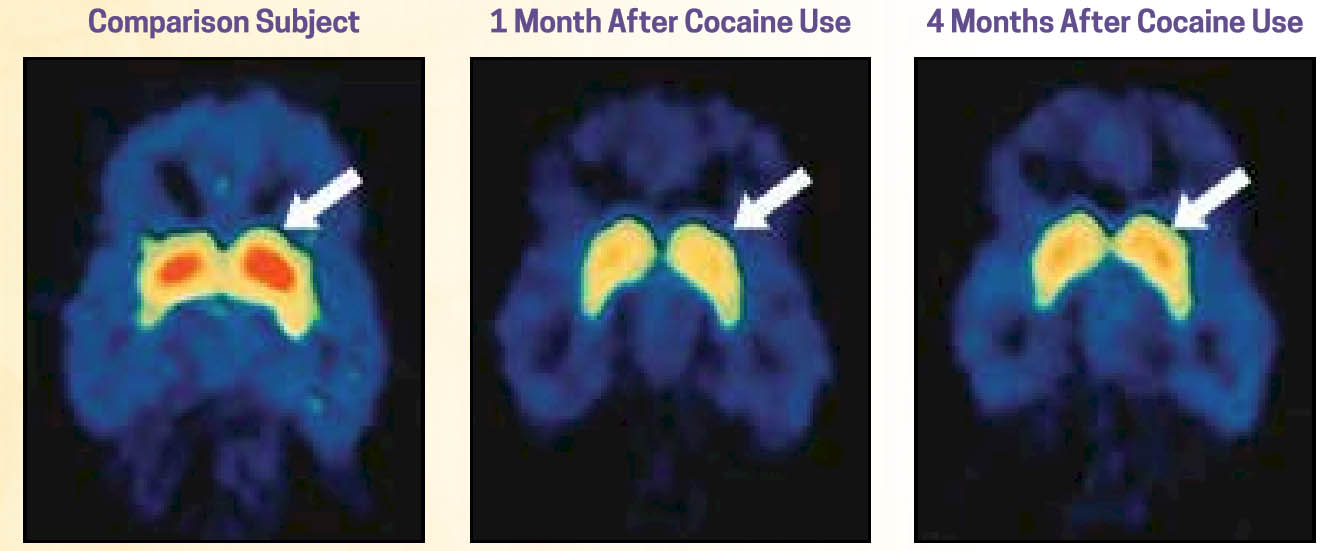
Sustained substance use produces measurable changes in brain function that can be observed through imaging techniques such as fMRI. These changes reflect alterations in neural activity and receptor availability, particularly within systems associated with reward and self-regulation. While some degree of recovery occurs following cessation, these changes do not resolve immediately, which helps explain why vulnerability to relapse remains elevated even after periods of abstinence.
Figure 3.3. Brain Scans Showing Dopamine Receptor Density Changes Following Cocaine Use Disorder
Note. From the National Institute on Drug Abuse (2018), reproduced in Stoddard Dare & Begun (2020). CC BY-NC 4.0.
The persistence of these changes reinforces that recovery involves more than discontinuing substance use. It takes time for the brain to recalibrate, during which individuals may experience reduced reward capacity, impaired regulation, and increased stress sensitivity.
Developmental Impact
The impact of substance use is shaped in part by the timing of exposure, particularly during periods of rapid brain development. Prenatal exposure represents one such period in which substances can interfere with foundational processes of growth and organization. Conditions such as fetal alcohol spectrum disorders reflect the long-term consequences of this disruption, affecting both physical and cognitive development across the lifespan (Jones & Smith, 1973; Streissguth & O’Malley, 2000). These effects often emerge over time, becoming more apparent as developmental demands increase, which highlights the importance of early identification and intervention.
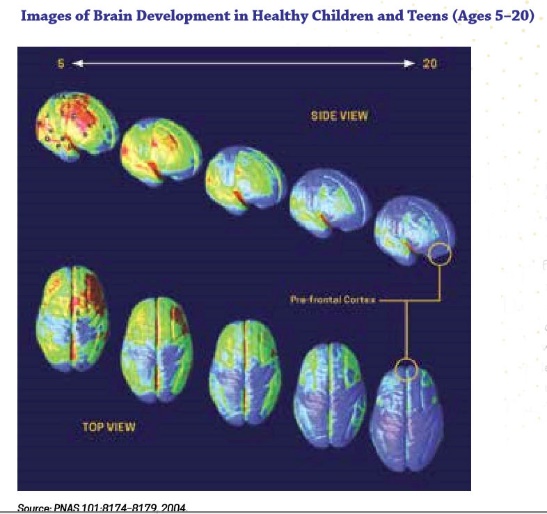
Figure 3.4. Brain Development From Age 5 to 20 Shows a Shift in Grey Matter Concentration
Note. From the National Institute on Drug Abuse (2018), reproduced in Stoddard Dare & Begun (2020). CC BY-NC 4.0.
Adolescence and emerging adulthood represent another critical period, defined by ongoing brain reorganization and increased sensitivity to reward. During this time, the systems responsible for emotional experience develop more rapidly than those responsible for regulation, creating a temporary imbalance that increases vulnerability to risk-taking behavior (Meredith & Squeglia, 2020; Siegel, 2014). Substance use during this period can alter the course of development, with earlier initiation consistently associated with greater long-term risk (Hawkins et al., 1997; Robins & Przybeck, 1985). The chances of developing severe substance use disorders are higher among individuals whose substance use began before age 15 (Robins & Przybeck, 1985), and alcohol dependence was found to be four times more likely among individuals whose drinking onset was before age 15 compared to age 21 (National Institute on Alcohol Abuse and Alcoholism [NIAAA], 1998). This developmental sensitivity reinforces the importance of prevention efforts that delay onset, as even small shifts in timing can significantly alter long-term outcomes.
Neurochemistry and Function
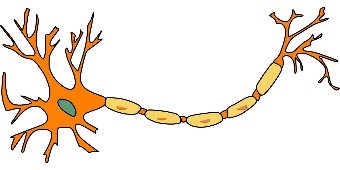
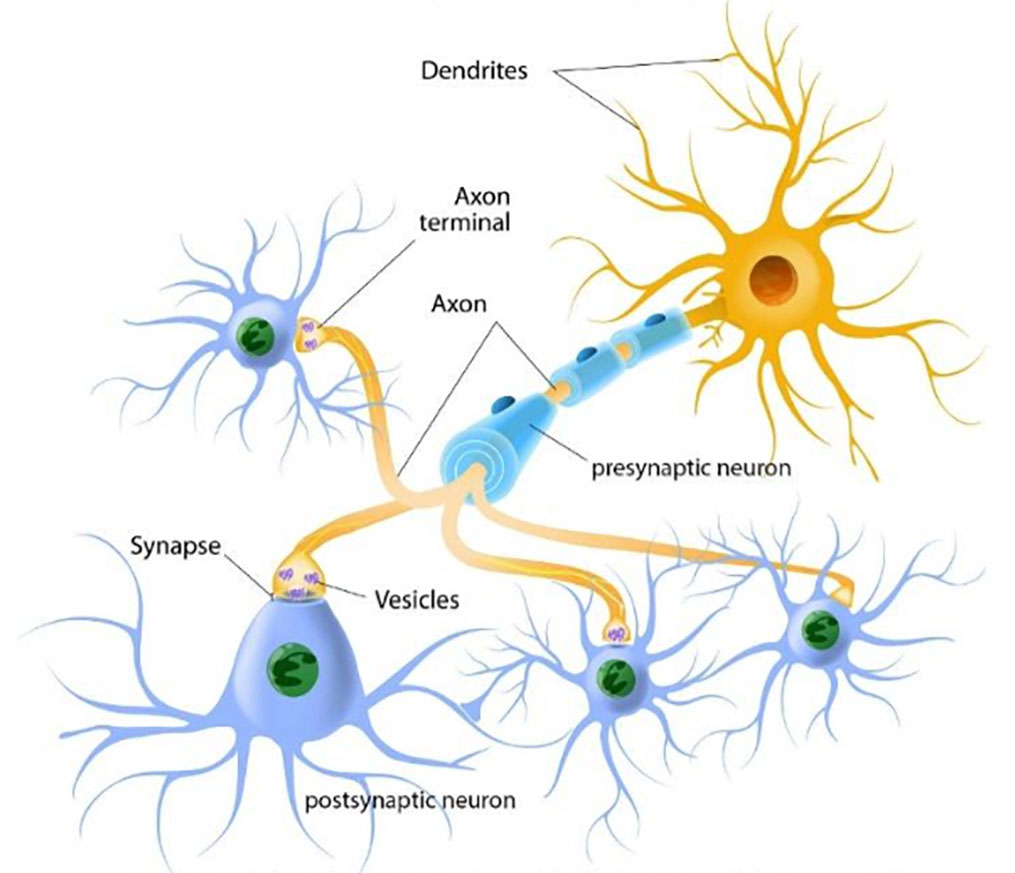
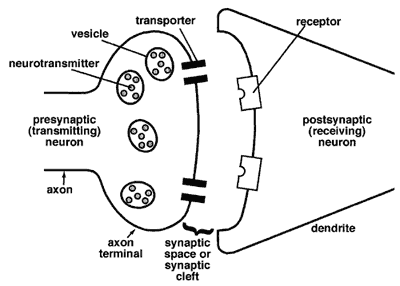
At a more detailed level, substance use influences how neurons communicate within the brain. Neurons rely on neurotransmitters to transmit signals, and these chemical exchanges determine whether communication is strengthened, weakened, or interrupted. This process occurs at the synapse, where one neuron releases neurotransmitters that are received by another neuron. The effectiveness of this communication depends on receptor availability, signal strength, and the rate at which neurotransmitters are reabsorbed and reused.
Figure 3.5. Neuron Structure Showing Receptor Sites and Vesicles
Note. From Stoddard Dare & Begun (2020). CC BY-NC 4.0.
Substances alter this communication in different ways. Some enhance signaling by increasing neurotransmitter release, while others interfere with reuptake or block receptor sites altogether. These alterations affect how messages are transmitted across neural networks, which influences mood, perception, and behavior.
Figure 3.6. Neurons and How They Communicate Across the Synapse
Note. From Stoddard Dare & Begun (2020). CC BY-NC 4.0.
Figure 3.7. Diagram of Neurotransmission at the Synapse
Note. From the National Institutes of Health, reproduced in Stoddard Dare & Begun (2020). CC BY-NC 4.0.
The following neurotransmitters are especially relevant to understanding substance use and its effects. Rather than functioning in isolation, these systems interact to maintain a balance between activation and inhibition. Substance use disrupts this balance by amplifying some signals while dampening others, which helps explain changes in mood, attention, and behavioral control.
Dopamine+
Has both excitatory and inhibitory effects depending on the nature of the receptor sites involved, is associated with the brain’s reward systems, and is increased to abnormal levels by substances such as alcohol, cocaine, and heroin, influencing their addictive potential (Volkow et al., 2010).
Endorphins and Enkephalins+
Two neuropeptides that play a role in producing some of the rewarding effects experienced with the use of alcohol and some other substances. Endorphins relate to opiate receptors causing an analgesic (pain control) effect; enkephalins are similar to endorphins.
Epinephrine (Adrenaline)+
An excitatory neurotransmitter involved in the “fight or flight” response, activating the body’s stress response and increasing physiological arousal and readiness for action.
GABA (Gamma-Aminobutyric Acid)+
An inhibitory neurotransmitter widely distributed throughout the brain that plays a critical role in alcohol misuse and alcohol use disorder. Alcohol increases the effect of GABA, contributing to feelings of calm, relaxation, and sedation.
Glutamate+
The most common neurotransmitter in the CNS; excitatory, plays a key role in regulating attention and arousal, and typically acts in opposition to GABA. Increases neural activity and supports learning and memory.
Norepinephrine (Noradrenaline)+
An excitatory neurotransmitter closely related to epinephrine that helps drive the “fight or flight” response. Regulates alertness and the stress response, influencing attention and physiological activation.
Serotonin+
An inhibitory neurotransmitter that helps regulate many functions including sleep, cravings, and pain control, as well as emotional states, offsetting the effects of excitatory neurotransmitters.
Neurotransmitter systems are more dynamic than earlier models suggested. A single neuron may release different neurotransmitters depending on the stimulus conditions, reflecting the brain’s capacity for flexible communication. These chemical systems also extend beyond the brain, influencing processes throughout the body related to pain, reward, and physiological regulation. This broader role helps explain why substance use affects both mental and physical functioning.
It is also important to recognize that these systems are engaged in everyday life, not just in substance use. Natural behaviors activate the same reward pathways that substances affect. What differentiates psychoactive substances is the intensity and speed of their impact. When substances produce a stronger or more immediate signal than naturally occurring rewards, they increase the likelihood of repeated use (National Institute on Drug Abuse [NIDA], 2018). The method of use further shapes this effect, as faster delivery to the brain produces a more intense experience and strengthens reinforcement (Volkow et al., 2010).
Homeostasis
One of the defining features of the brain is its capacity to adapt in order to maintain internal stability. This process, known as homeostasis, drives tolerance development and withdrawal. With repeated exposure to a substance, the brain adjusts its functioning to counteract its effects, leading to a need for higher doses to achieve the same experience. This adaptation reflects a shift in baseline functioning rather than a simple escalation of use. When a person uses a great deal of alcohol, often over time, for example, the brain begins to adapt to its effect on GABA. In attempting to reacquire homeostasis, the brain upregulates its arousal systems (glutamate) to offset the overly inhibitory impact of extra GABA triggered by alcohol, while simultaneously downregulating GABA production (Koob & Simon, 2009; Trevisan et al., 1998).
When substance use stops, these adaptations do not immediately reverse. The brain remains in a state that reflects prior exposure, creating an imbalance that is experienced as withdrawal. A decrease in dopamine or serotonin contributes to dysphoria and anhedonia; a decrease in GABA contributes to anxiety and panic; an increase in glutamate contributes to hyperexcitability; and an increase in norepinephrine contributes to the experience of stress (Koob & Simon, 2009; Trevisan et al., 1998). These experiences are not incidental. They are the direct result of neurobiological processes attempting to reestablish equilibrium.
Withdrawal can be intense, prolonged, and in some cases life-threatening, which makes medically informed responses essential. During withdrawal and early recovery, the risk for suicide is greater than in the general population because of these brain-behavior processes. Recognizing these processes shifts the focus toward stabilization, support, and appropriate intervention, reinforcing that recovery is not simply a matter of choice but a process that unfolds within a changing biological system.
Summary
This chapter examined the neurobiology of substance use across two areas. The first addressed genetic influence, explaining that inherited factors account for a substantial share of vulnerability while never determining outcomes on their own. The second traced how the brain responds to substances, covering key regions, neurotransmission, brain development, and the adaptations that underlie tolerance and withdrawal. Throughout, the emphasis fell on understanding biology as one part of a larger picture rather than a complete account of why substance use develops. This grounding prepares students to interpret biological information in ways that inform practice without losing sight of the person.
Key Terms
Show key terms+
Dopamine. A neurotransmitter central to reward and motivation that is strongly involved in the reinforcing effects of substances.
Genetic vulnerability. Inherited factors that raise the likelihood of developing a substance use disorder without making it inevitable.
Heritability. The share of variation in a trait, such as risk for a substance use disorder, that can be attributed to genetic differences within a population.
Neuroadaptation. The brain’s gradual adjustment to repeated substance exposure, which underlies both tolerance and withdrawal.
Neurotransmission. The process by which neurons communicate by releasing chemical messengers across the synapse.
Reward system. The network of brain regions that reinforces behaviors by signaling pleasure or relief, and that substances can activate intensely.
Tolerance. A state in which repeated use leads the body to require more of a substance to achieve the same effect.
Withdrawal. The set of physical and psychological symptoms that appear when use of a substance is reduced or stopped after the body has adapted to it.
Where This Leads
This chapter completes Module 1, which built the foundation for the course: how substances are classified, how addiction has been explained, and how biology shapes vulnerability and adaptation. With that grounding in place, the focus widens from the individual body and brain to the world around the person.
Module 2 situates substance use within its social, historical, and systems contexts. Chapter 4 begins that shift by examining how relationships, families, and social environments influence substance use, recovery, and access to care, picking up the contextual thread that the biological account on its own cannot fully explain.
Further Reflection
| Heritability describes populations, not individuals. Why does that distinction matter when talking with a client about family history? |
| How can neurobiological explanation reduce blame without removing a person’s sense of agency in their own recovery? |
| What is lost when the brain becomes the only lens through which addiction is understood? |
Attributions
This chapter is an adaptation of “Ch. 2.1” and “Ch. 2.2” in Introduction to Substance Use Disorders by Patricia Stoddard Dare and Audrey Begun, licensed under a Creative Commons Attribution-NonCommercial 4.0 International License. Additional commentary, contextual framing, and instructional modifications have been incorporated to align the material with the objectives and structure of this text.
Bibliography
Show references+
Note: This chapter adapts “Ch. 2.1” and “Ch. 2.2” from Introduction to Substance Use Disorders by Patricia Stoddard Dare and Audrey Begun, licensed under CC BY-NC, and adds original commentary, framing, and sources developed for this text. References drawn from the adapted source and those added here are listed together below.
Azmitia, E. C. (2001). Impact of drugs and alcohol on the brain through the life cycle: Knowledge for social workers. Journal of Social Work Practice in the Addictions, 1(3), 41–63.
Bares, C. B., & Chartier, K. G. (2020). The role of genes and environments in shaping substance misuse. In A. L. Begun & M. M. Murray (Eds.), The Routledge handbook of social work and addictive behaviors (pp. 78–94). Routledge. https://doi.org/10.4324/9780429203121-6
Begun, A. L., & Brown, S. (2014). The neurobiology of substance use disorders and implications for treatment. In S. L. A. Straussner (Ed.), Clinical work with substance-abusing clients (3rd ed., pp. 39–66). Guilford Press.
Edenberg, H. J., Gelernter, J., & Agrawal, A. (2019). Genetics of alcoholism. Current Psychiatry Reports, 21(4), Article 26. https://doi.org/10.1007/s11920-019-1008-1
Foroud, T., Edenberg, H. J., & Crabbe, J. C. (2010). Genetic research: Who is at risk for alcoholism? Alcohol Research & Health, 33(1–2), 64–75.
Giancola, P. R., & Tarter, R. E. (1999). Executive cognitive functioning and risk for substance abuse. Psychological Science, 10(3), 203–205.
Hancock, D. B., Markunas, C. A., Bierut, L. J., & Johnson, E. O. (2018). Human genetics of addiction: New insights and future directions. Current Psychiatry Reports, 20(2), Article 8. https://doi.org/10.1007/s11920-018-0873-3
Hawkins, J. D., Graham, J. W., Maguin, E., Abbott, R., Hill, K. G., & Catalano, R. F. (1997). Exploring the effects of age of alcohol use initiation and psychosocial risk factors on subsequent alcohol misuse. Journal of Studies on Alcohol, 58(3), 280–290. https://doi.org/10.15288/jsa.1997.58.280
Jang, K. L., Livesley, W. J., & Vernon, P. A. (1997). Gender-specific etiological differences in alcohol and drug problems: A behavioural genetic analysis. Addiction, 92(10), 1265–1276.
Jones, K. L., & Smith, D. W. (1973). Recognition of the fetal alcohol syndrome in early infancy. Lancet, 2(7836), 999–1001.
Kendler, K. S., Heath, A. C., Neale, M. C., Kessler, R. C., & Eaves, L. J. (1992). A population-based twin study of alcoholism in women. Journal of the American Medical Association, 268(14), 1877–1882.
Koob, G. F., & Simon, E. J. (2009). The neurobiology of addiction: Where we have been and where we are going. Journal of Drug Issues, 39(1), 115–132. https://doi.org/10.1177/002204260903900110
Li, C. Y., Zhou, W. Z., Zhang, P. W., Johnson, C., Wei, L., & Uhl, G. R. (2011). Meta-analysis and genome-wide interpretation of genetic susceptibility to drug addiction. BMC Genomics, 12, Article 508. https://doi.org/10.1186/1471-2164-12-508
Logrip, M. L., Zorrilla, E. P., & Koob, G. F. (2012). Stress modulation of drug self-administration: Implications for addiction comorbidity with post-traumatic stress disorder. Neuropharmacology, 62(2), 552–564.
Meredith, L. R., & Squeglia, L. M. (2020). The adolescent brain: Predictors and consequences of substance use. In A. L. Begun & M. M. Murray (Eds.), The Routledge handbook of social work and addictive behaviors (pp. 216–231). Routledge. https://doi.org/10.4324/9780429203121-15
Merikangas, K. R., Stolar, M., Stevens, D. E., Goulet, J., Preisig, M. A., Fenton, B., Zhang, H., O’Malley, S. S., & Rounsaville, B. J. (1998). Familial transmission of substance use disorders. Archives of General Psychiatry, 55(11), 973–979. https://doi.org/10.1001/archpsyc.55.11.973
National Institute on Alcohol Abuse and Alcoholism. (1998). Age of drinking onset predicts future alcohol abuse and dependence [News release]. https://www.niaaa.nih.gov/news-events/news-releases/age-drinking-onset-predicts-future-alcohol-abuse-and-dependence
National Institute on Drug Abuse. (2018). Drugs, brains, and behavior: The science of addiction (NIH Publication No. 18-DA-5605). U.S. Department of Health and Human Services.
Palmer, R. H. C., Button, T. M., Rhee, S. H., Corley, R. P., Young, S. E., Stallings, M. C., Hopfer, C. J., & Hewitt, J. K. (2012). Genetic etiology of the common liability to drug dependence: Evidence of common and specific mechanisms for DSM-IV dependence symptoms. Drug and Alcohol Dependence, 123(Suppl. 1), S24–S32.
Robins, L. N., & Przybeck, T. R. (1985). Age of onset of drug use as a factor in drug and other disorders. In C. L. Jones & R. J. Battjes (Eds.), Etiology of drug abuse: Implications for prevention (NIDA Research Monograph No. 56, pp. 178–192). U.S. Department of Health and Human Services.
Russell, M. (1990). Prevalence of alcoholism among children of alcoholics. In M. Windle & J. S. Searles (Eds.), Children of alcoholics: Critical perspectives (pp. 9–38). Guilford Press.
Siegel, D. J. (2014, February 4). Pruning, myelination, and the remodeling adolescent brain. Psychology Today. https://www.psychologytoday.com/us/blog/inspire-to-rewire/201402/pruning-myelination-and-the-remodeling-adolescent-brain
Streissguth, A. P., & O’Malley, K. (2000). Neuropsychiatric implications and long-term consequences of fetal alcohol spectrum disorders. Seminars in Clinical Neuropsychiatry, 5(3), 177–190.
Trevisan, L. A., Boutros, N., Petrakis, I. L., & Krystal, J. H. (1998). Complications of alcohol withdrawal: Pathophysiological insights. Alcohol Health & Research World, 22(1), 61–66.
Volkow, N. D., Wang, G. J., Fowler, J. S., Tomasi, D., Telang, F., & Baler, R. (2010). Addiction: Decreased reward sensitivity and increased expectation sensitivity conspire to overwhelm the brain’s control circuit. BioEssays, 32(9), 748–755. https://doi.org/10.1002/bies.201000042
